
Center de Châtenay - OPU / ICSI
Ovum pick up & ICSI: producing with precision, lucidity and respect.
The Intra-Cytoplasmic Sperm Injection technique marks a major turning point in modern equine reproduction. It overcomes the physiological constraints of conventional insemination, while offering new levers for preserving and improving genetic lines.
Introduction
A technique that is profoundly changing equine reproduction.
On this page, we are delighted to present a detailed overview of the advancements in oocyte retrieval and ICSI techniques at the Châtenay Reproductive Center. We will discuss the group of mares benefiting from this scientific advancement, as well as the specific procedure used to achieve pregnancies through ICSI. We will also share the encouraging results from 2025, which are currently being implemented. You’ll learn about the rigorous protocol in place for admitting a mare to the center, with a focus on our approach to demystifying ICSI and highlighting its crucial role in breeding. The importance of animal welfare management will also be highlighted, along with a detailed analysis of the associated costs. Finally, we will focus on dispelling common misconceptions surrounding this revolutionary technique.
Read the full introduction to ICSI
The Intra-Cytoplasmic Sperm Injection (ICSI) technique has emerged as a revolutionary advance in equine reproduction, marking a major turning point in the preservation and improvement of genetic lines.
This process has overcome the challenges associated with mare and stallion fertility, offering solutions for young, sport-active mares, infertile subjects and large breeders.
By enabling the creation of offspring without the physiological constraints of insemination, ICSI opens up new prospects for the production of exceptional foals, making a significant contribution to the progress of modern equine reproduction.
Start a project
The essential documents, immediately accessible.
The agreements allow us to open the file, specify the accommodation conditions, frame the oocyte puncture / ICSI and organize the implantation of a frozen embryo.
Why choose BLH?
A complete, easy-to-read protocol designed for both mare and breeder.
Our difference is based on an integrated approach: mare comfort, economic transparency, laboratory proximity, oocyte quality and a single point of contact for every stage.
Ethics
Under sedation without epidural, with a highly experienced surgeon, so fast and gentle. The conditions of comfort, our priority, are met.
Accessible
Our studies have shown that 75% of gestations obtained with ICSI are more economical than the average embryo transfer.
Realistic
There's no question of additional charges, endless pensions or stallion deferrals. Everything is transparent and consistent with your initial project.
All inclusive
We handle all the steps and are your single point of contact. It's much easier for you to manage.
Direct
We are the closest center to the laboratory, which means better quality oocytes and a guarantee that they will arrive as soon as possible.
BLH 2026 guide
Guide to oocyte puncture & ICSI
To understand the technique, indications, results, costs, choice of standards and overall strategy.
Understanding through images
Milestones in video
Detailed explanations: project, puncture, ICSI fertilization, embryo freezing and implantation.
Project and procedure for egg retrieval
A complete overview of the process, from mare preparation to oocyte processing.
ICSI procedure
Maturation, intracytoplasmic injection and embryo production with Avantea.
Implantation of frozen embryos
Return of the embryo to the Châtenay Center and implantation on a suitable recipient.
What type of mare is ICSI suitable for?
A technique for very different profiles.
ICSI is not reserved for just one type of mare. It can be used for a wide variety of purposes: to preserve genetics, to produce despite a sporting career, to manage age, to enhance the value of a great breeder or to overcome certain fertility limits.
Read more about the mares concerned
The Intra-Cytoplasmic Sperm Injection (ICSI) technique has emerged as a revolutionary advance in equine reproduction, marking a major turning point in the preservation and improvement of genetic lines.
This process has overcome the challenges associated with mare and stallion fertility, offering solutions for young, sport-active mares, infertile subjects and large breeders.
By enabling the creation of offspring without the physiological constraints of insemination, ICSI opens up new prospects for the production of exceptional foals, making a significant contribution to the progress of modern equine reproduction.
Young mares
Preserve genetics prior to marketing or a sporting career, without interrupting the mare's value-added for any length of time.
Mares in competition
Organize breeding during windows that are compatible with the sporting career and limit schedule interruptions.
Age mares
Reduce the physical load and limit season constraints for mares whose classical reproductive career is becoming more delicate.
Large breeders
Create several embryos, diversify crossbreeding and build a more controlled production strategy.
Subfertile mares
Offer a production option when conventional techniques become inefficient, time-consuming or too restrictive.
Center de Châtenay results
These results change the economic and technical interpretation of the project.
Read the detailed results analysis
The success of ICSI fertilization, which benefits a wide range of mares with frequent sub-fertility problems, lies essentially in its high success rate. This effectiveness is demonstrated in two significant ways.
Firstly, the percentage of ICSI procedures resulting in no embryo is remarkably low, at just 10%. By comparison, the corresponding rates for other reproductive techniques such as artificial insemination with fresh (IAF), refrigerated (IAR) or frozen (IAC) sperm are between 30% and 70%.
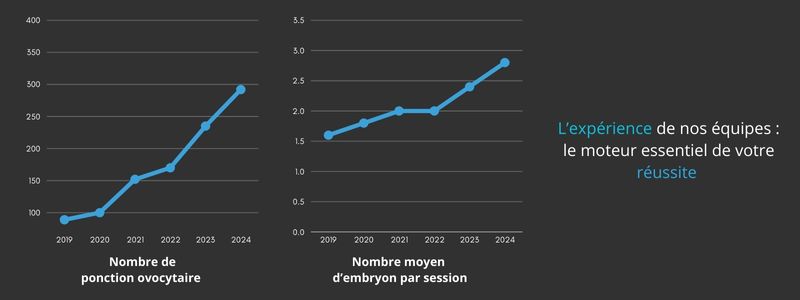
Secondly, the average number of embryos produced by ICSI considerably reduces the time mares have to spend breeding. This gain in productivity is particularly beneficial for sport mares and young mares, as it optimizes their schedule.
What's more, this method helps to improve the comfort and extend the longevity of sub-fertile, aged or breeding mares, by lightening the physical load associated with traditional breeding processes.
This graph shows the percentage of oocyte retrievals as a function of the number of embryos produced by ICSI.
Events at the Châtenay Center
From the arrival of the mare to the implantation of the embryo
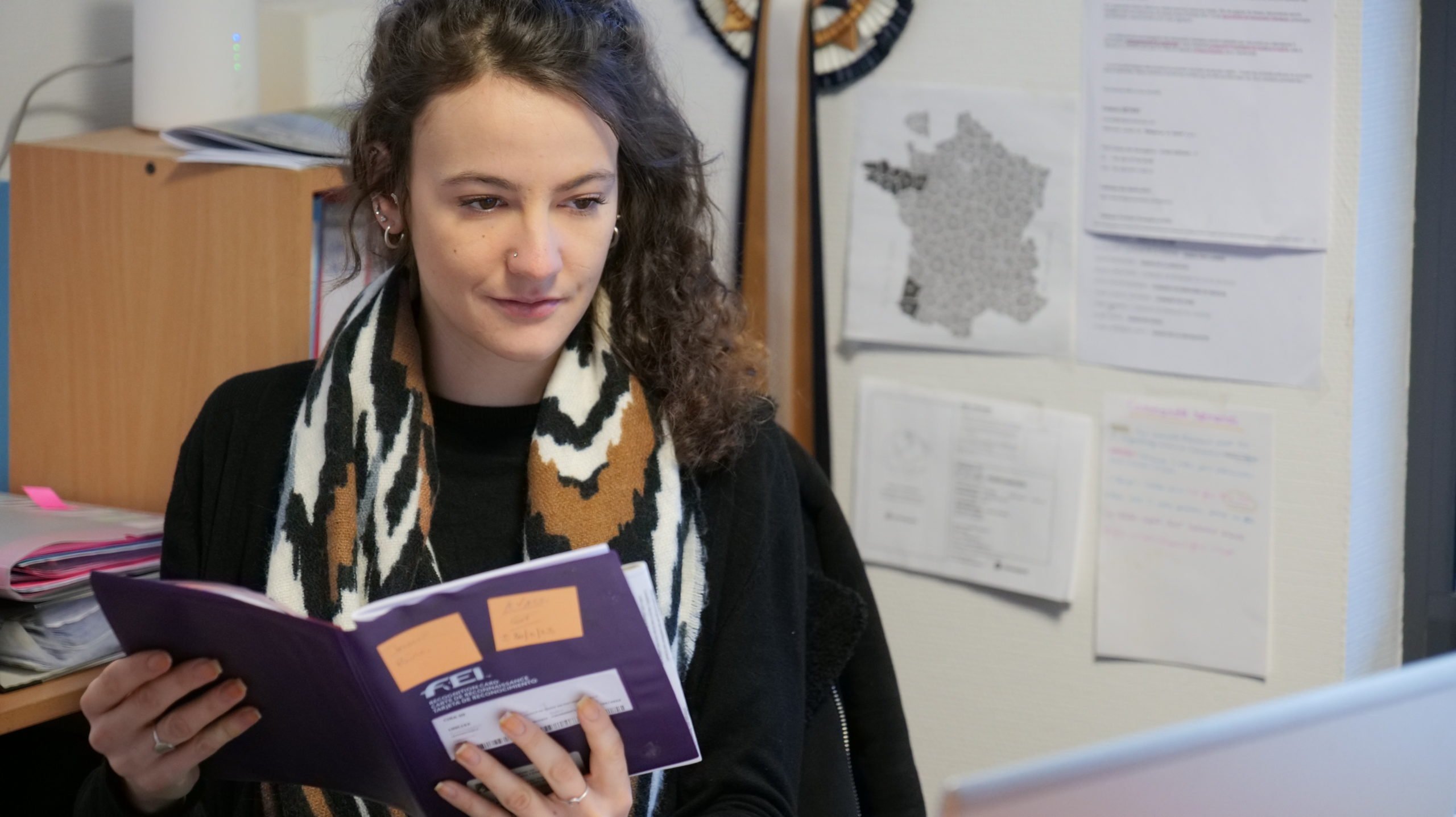
01 - Arrival of the mare
Documents, agreements, health status, living habits and accommodation conditions are checked to reduce stress and prepare the protocol.
02 - Ultrasound follow-up
Veterinarians assess the follicles that can be punctured, the comfort of handling and the optimal window of intervention.
03 - OPU
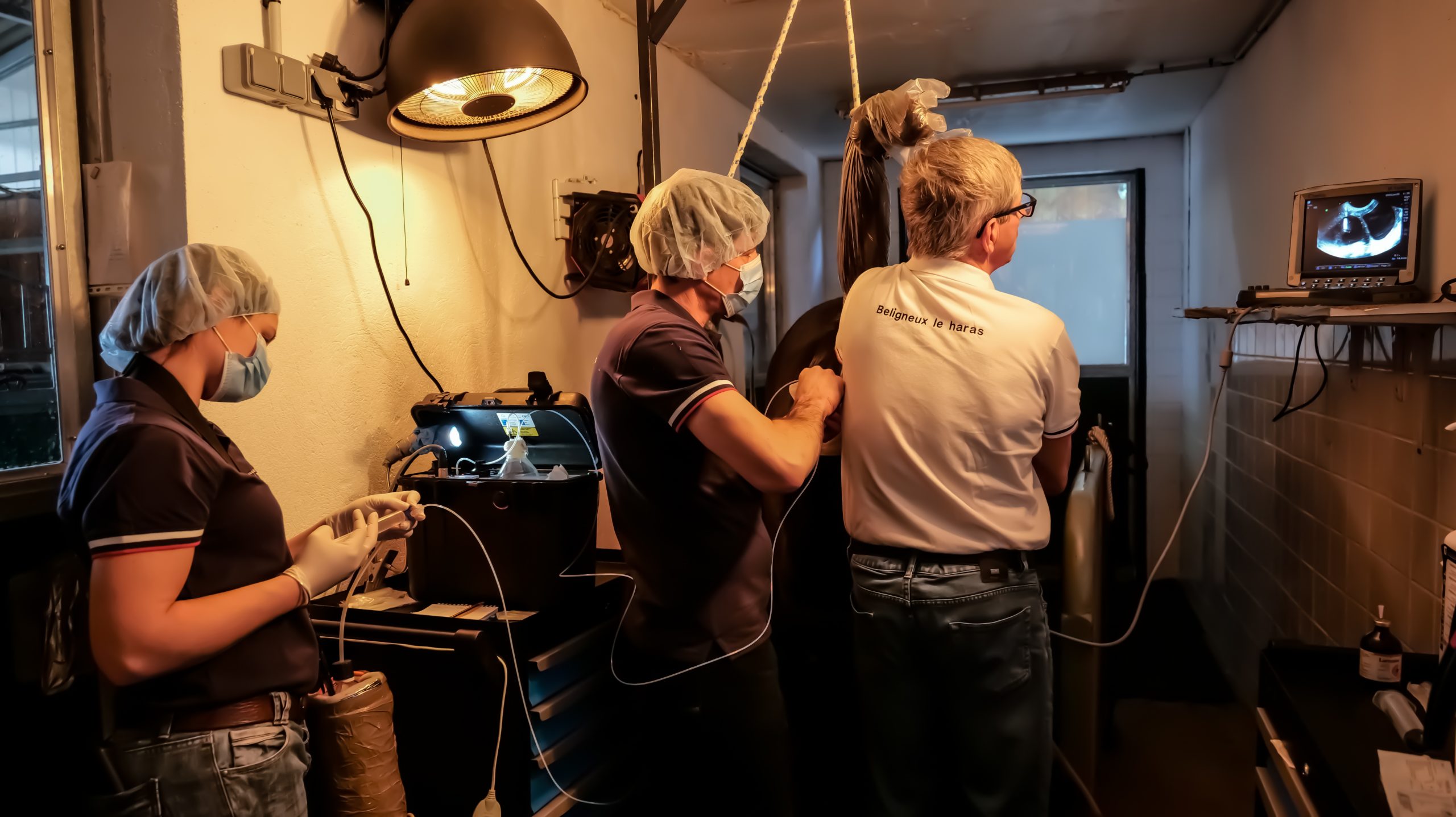
The puncture is performed under precise sedation, without an epidural, with a team attentive to the absence of discomfort and the mare's natural immobility.
04 - Post-OPU management
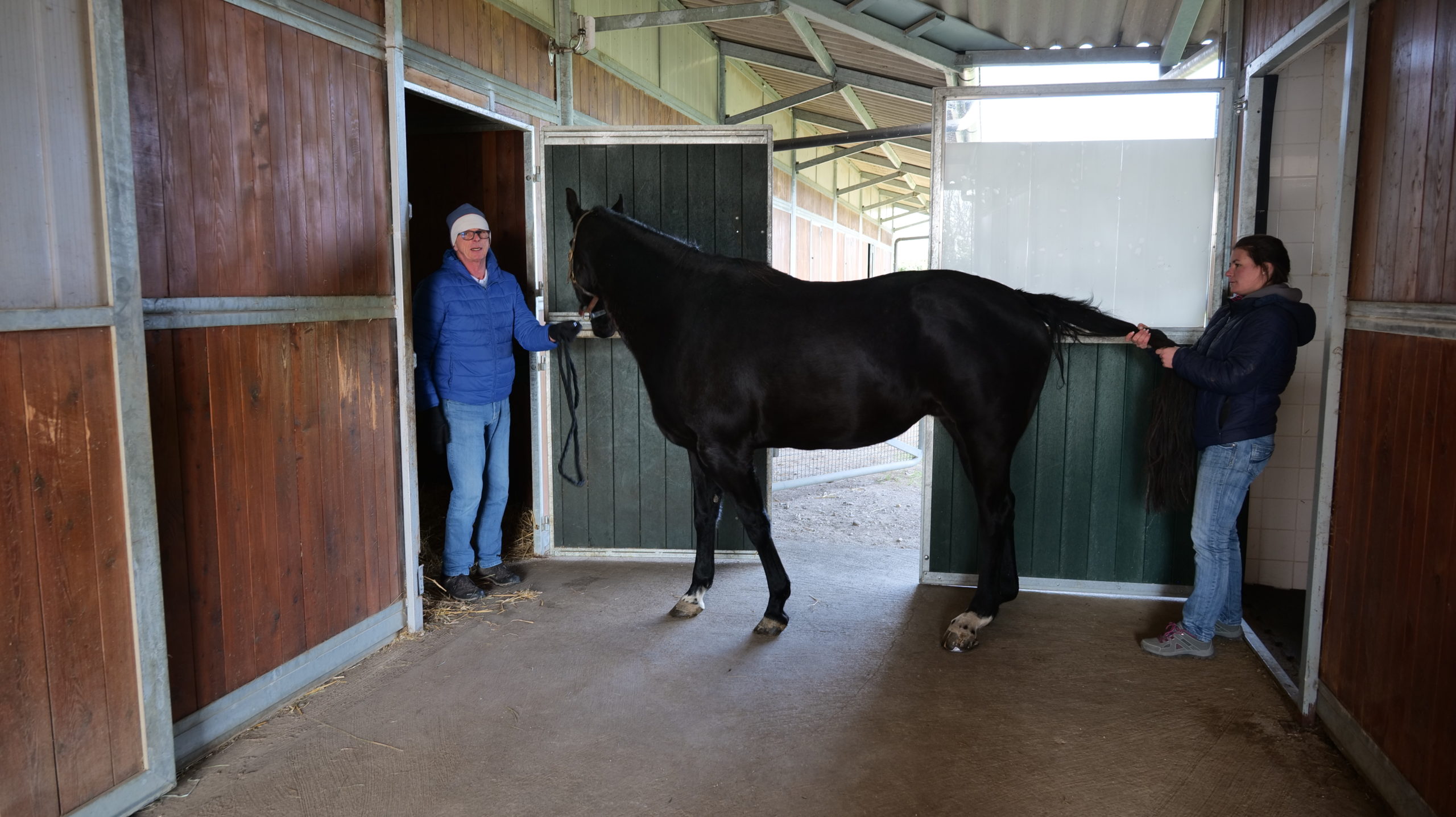
The mare is accompanied when she wakes up, checked by the care team and monitored in the days following the operation.
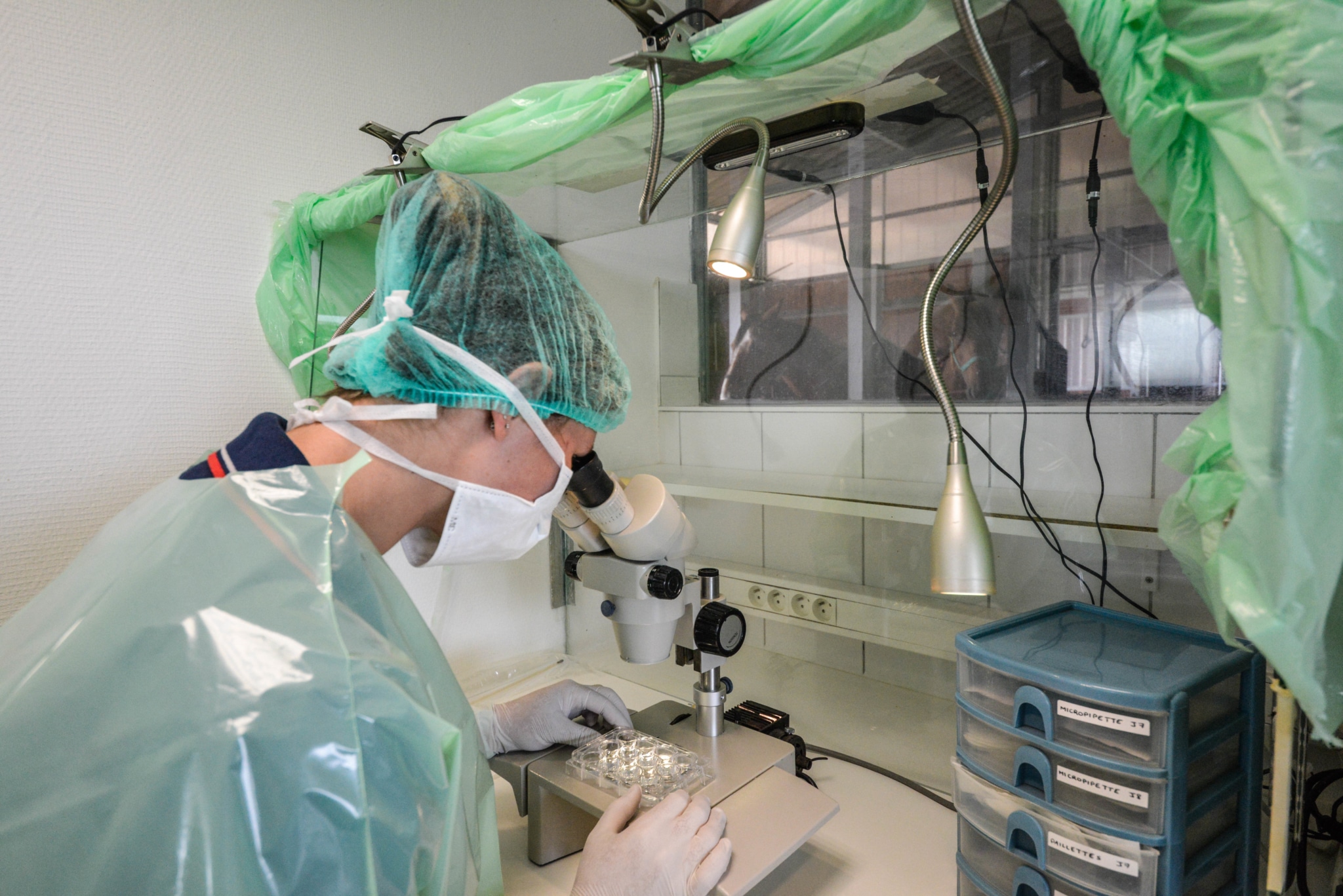
05 - Oocyte preparation
The oocytes are prepared in the Châtenay laboratory for transmission to the partner laboratory under optimum conditions.
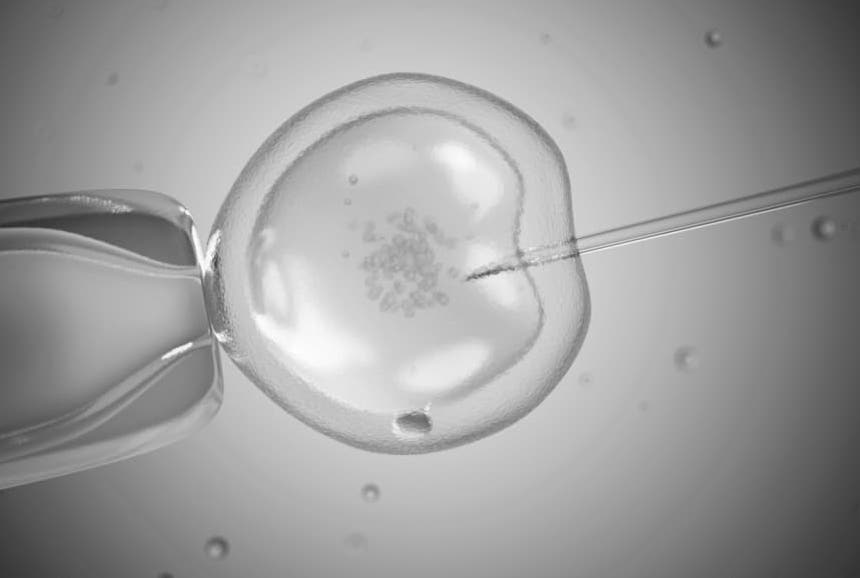
06 - ICSI
Mature oocytes are fertilized with the chosen seed, then viable embryos are cultured and frozen.
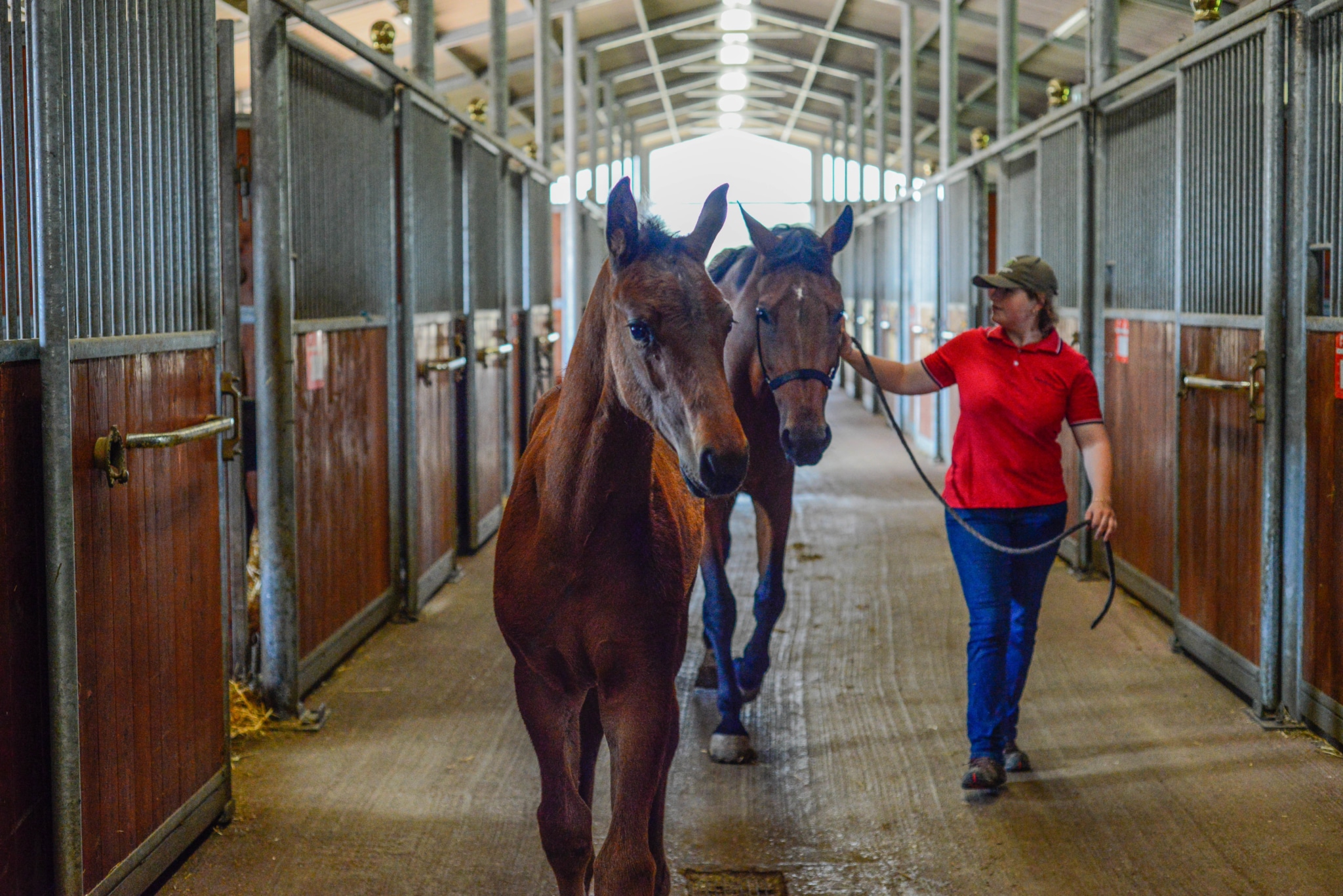
07 - Layout
Frozen embryos are implanted on a suitable recipient, as part of the frozen embryo transfer protocol.
Budget OPU / ICSI
What is the budget required to carry out an oocyte puncture and an ICSI with a stallion from the BLH catalog?
The main advantage of this technique is that it does not incur unexpected costs, as is often the case for artificial insemination and embryo transfer. Here, everything is clear. See for an overview of the costs involved.
Comfort & ethics
Well-being management of mares during oocyte puncture at Châtenay.
Read the full article on comfort and ethics
Hosting management
When a mare is welcomed at the Centre de Châtenay, the owner is invited to share his mare's lifestyle. This approach aims to alleviate the stress associated with "moving house", by maintaining your lifestyle as much as possible. In contrast to a one-size-fits-all approach, the center strives to respect the individual needs of each mare, using the tools available.
Ultrasound session
During the ultrasound session to count ovarian follicles, young "novice" mares are handled calmly, often accompanied by a female partner. Our vets proceed calmly, without the time constraints imposed by the breeding season.
Power supply
During the oocyte puncture session, the first mare must not have eaten in the previous hour, and we work with the care team to ensure that mares stressed by feeding are not the first.
Preparing for oocyte puncture
On arrival in the gynecological room (prior to the oocyte puncture room), the mare is first sedated. Meanwhile, the gynecological surgeon performs asepsis of the vulvar region and empties the rectum. This allows the mare to calmly enter the puncture room, where the technical team settles in. The mare is still awake enough to move around, and enters the egg puncture room without any of the stress a mare can have in confined spaces.
Oocyte puncture management
Once the puncture kit is inserted into the mare's vagina, a second sedation is administered, including general tranquilization and an antispasmodic to relax the rectum. The manipulator grasps the ovary and brings it into contact with the transvaginally inserted ultrasound probe. The technical team then pauses for a few seconds to ensure that the mare is perfectly asleep.
Dedicated wellness staff give the signal to go to sleep and ensure that the restraint is comfortable. Sedation is precisely dosed to avoid any discomfort, and oocyte puncture is performed without pain, as the slightest contraction would be detected and would not allow the precision required by the act of puncturing a follicle.
Our protocol eliminates the need for epidural immobilization, favoring a return to the cubicle with normal locomotion and eliminating a sensitive technical procedure.
The alarm clock
At the end of the oocyte puncture, the mare recovers from sedation in the thermostatically-controlled room, before returning to the recovery box located a few meters away in a straight line from the operating room. During the day, the care team handles the mare, checks her vitals, makes sure she has an appetite for hay, and administers a routine dose of antibiotics to prevent infection.
Post-op follow-up
For a period of 3 days, the mares will be checked early in the morning to ensure that: the mare has no fever, the mare eats with appetite, the limbs are not engorged and the mare seems cheerful.
All in all
We understand that concerns may remain, and we are always open to constructive dialogue to continue to improve our practices and address legitimate concerns.
For those who question the technique without considering our commitment to animal welfare, we invite them to deepen their understanding of our rigorous protocols and read about the positive results achieved. Because at the Centre de Châtenay, our priority is to combine technical excellence with absolute respect for our precious mares, ensuring an optimum balance between scientific progress and animal ethics.
Comparative study
Oocyte puncture & ICSI versus insemination followed by embryo transfer.
The comparison should not be based solely on the apparent cost. It must take into account the average number of foals, the risk of getting nothing and the chances of getting at least one foal.
1 - Embryo transfer: full details
Purchase of glitter, two cycles: €1,600
Gynecological follow-up: €380
Installation: €280
Two embryo collections, 50% fertility: €450
Board for two cycles: €390
Additional veterinary expenses, average: €200
Total cost per embryo: €3,300
Average number of foals per mare: 0.75
Risk of getting nothing: 40%.
Chances of obtaining a foal: embryo transfer with 2 straws, 50% fertility. Out of 100 mares, 25 will not produce an embryo. The reimplantation rate is 80%. Of the 75 embryos, 60 will implant. That's an average 60% chance of obtaining a foal.
2 - OPU / ICSI: full details
Follow-up costs, puncture and ICSI: €2,000
Embryo costs, average 2.5: €1,250
Board: €143
Genetics, 2.5 embryos: €1,400
Total cost per embryo: €3,217
Average number of foals per mare: 1.75
Risk of getting nothing: 15%.
Chances of obtaining a foal by ICSI: oocyte puncture and ICSI, puncture not producing an embryo: 10% for an average of 2.5 embryos. Re-implantation rate: 70%. i.e. 85% to obtain at least one foal.
Received ideas
Putting debates in their proper place.
technique with a scientific, technical and field reading.
Ovocyte puncture is painful for the mare: FALSE
As mentioned above, it would be possible to address the management of the mare's comfort. However, this approach may not be sufficient to convey all the crucial elements.
In this context, the predominant argument remains the comparison with human experience. When a woman undergoes an oocyte puncture (48,000 cases in 2020), she is asked to remain still despite the discomfort.
On the other hand, in the mare, no speech or mechanical restraint device should be used to force her into immobility as soon as the slightest discomfort appears, as such movements would make oocyte puncture impossible. So when we puncture a mare, it's because she doesn't feel any unpleasant sensations.
Ovocyte puncture damages the mare's ovary: FALSE
The ovary is made up of dense scar connective tissue, a substrate which, by its very nature, is accustomed to significant remodeling during follicular growth and ovulation.
Indeed, while the rupture of a 70 mm follicle leads to rapid and effective healing, the introduction of a needle during oocyte puncture remains a completely harmless procedure for this organ. Just a few days after the procedure, no visible marks remain, and new primordial follicles emerge.
Ovocyte puncture can sometimes result in the destruction of cystic areas. Interestingly, in five cases observed, mares with profoundly disturbed ovarian function showed significant improvement. These individuals returned to regular, high-quality cycles, testifying to the unexpectedly beneficial effects of this procedure on reproductive dynamics.
ICSI reduces genetic diversity: FALSE
As soon as a mare generates a higher number of foals than any other method, it's true that it theoretically reduces genetic diversity. However, critics of this preconceived idea invoke arguments that are more akin to outdated patriarchal behavior.
Indeed, no one seems troubled by the idea of a stallion producing 600 foals from fresh semen, whereas the idea of a mare producing 5 foals seems to ruffle feathers. Let's get serious!
Don't let yourself be blinded by auction catalogs which, it's true, mainly offer ICSI-derived gestations and focus on a few strains considered "bankable". However, it should be noted that these sales account for only a tiny fraction of the total number of gestations produced by ICSI.
In 2022, of the 85 mares undergoing oocyte puncture at the Châtenay center, only 5 shared a common maternal ancestor.

